Musikkanmeldelse (Review): Kallevik – Blood Oath (2026)

There is something particularly unsettling about the idea of a blood oath. Not because blood is necessarily synonymous with violence, but because it transforms a promise into something almost irreversible. A word ceases to be merely a word when there is a price attached to it. It is precisely this image that seems to linger over Blood Oath, the new album from Norwegian metal project Kallevik, created by Sergey Kallevik in 2025.

Based in Haugesund, Sergey presents himself as the force behind Kallevik, a project that began to take shape when he brought in Thomas Torgersen and WC, a musician who chooses to remain anonymous and contributes synthesizer work. What began as an individual endeavor eventually developed into a three-piece project, with Thomas handling the main vocals while Sergey also contributes vocals on several tracks.  Completing the album’s sonic architecture, Marcin Kotarabiński handles drums and mixing, while Maciej Dawidek is responsible for mastering. The record also features guest vocals from Fritz Emil Apeland and Dawid Zakrzewski, while the cover artwork itself was created by Sergey.


The album is set for release on Spotify on August 30, 2026, bringing together ten tracks that move through different atmospheres and territories within metal. But there is a much deeper story behind Blood Oath than its lineup and credits alone could reveal.

Much of the instrumental material was written between late 2025 and 2026, during a period deeply marked by grief, loss, survival, and the struggle to keep moving forward. Sergey himself explains that this experience inevitably left its mark on the album’s atmosphere and expression.

That does not turn Blood Oath into an album exclusively about death. And perhaps that distinction is important. What exists here is not necessarily a literal narrative about loss, but the imprint of an experience that became part of the creative process. There is a difference between writing about grief and creating while living through it.

And perhaps that is one of the reasons why the weight of Blood Oath seems to reach beyond distortion, speed, and sheer aggression.

Before we even reach the opening track, there is a journey that helps put Sergey into perspective as a musician. His experience stretches across different territories of the Haugesund scene, from heavy metal and solo work to death metal through Devour, the project he founded alongside Fritz Emil Apeland. Kallevik, however, does not simply emerge as an extension of those previous experiences. It becomes something else: a space where different parts of that journey can coexist beneath an entirely new identity.

And perhaps that freedom is precisely what makes Kallevik so compelling.

Rather than treating the past as a mandatory blueprint, Sergey appears to use it as raw material. Blood Oath does not need to erase what came before in order to establish its own territory; it simply chooses to move in another direction.

Interestingly, the only composition on the album that was not written during this more recent period is “Insens”. Sergey wrote the track when he was approximately fourteen to sixteen years old, decades before Kallevik even existed. The fact that a composition created during his adolescence survived the passing years and ultimately found its place on his first album with the project adds a particularly fascinating dimension to the record. It is almost as if a much older part of Sergey had traveled through time to find its place in an entirely different chapter of his life.

And so “Evocatio Mortuorum” opens the album.

The title immediately places us in ritualistic territory. The evocation of the dead carries with it the sensation of a summoning, as though the album begins not with an introduction, but with the opening of a threshold. The past is called back, and whatever had been buried is no longer willing to remain silent.

The introduction announces the album’s arrival like a genuine funeral procession, with powerful acoustic guitars intertwined with the pounding of the drums, carrying that summons forward. There is solemnity in these opening moments, but it never becomes contemplation. It feels more like the instant before a door is opened.

And when that door swings open, “Gorgon Sisters” leaves no room for hesitation.

The Gorgons carry one of the most recognizable images in Greek mythology, yet their presence here feels less like decorative mythology and more like part of an atmosphere where beauty, monstrosity, and power coexist. There is something fascinating about the way mythological figures continue to find a home within extreme music, precisely because their symbols remain recognizable even after so many centuries.

The guitars tear through the atmosphere, and then the drums and bass begin to trace every note with relentless consistency, driving through the track like an unstoppable steam engine. The vocals are as volatile as the moments of lead work, while the riffs pulverize whatever traces of initial calm may have remained.

There is no hesitation.

The track moves as though it has found only one possible direction and simply refuses to look back.

“The Eagle” shifts the perspective once again. The image of the eagle carries associations of strength, dominance, freedom, and a vision seen from above. After walking among the dead and the mythological creatures, the album seems to gain altitude, as though for a moment we are allowed to observe everything from a greater distance.

Yet it is precisely here that the boundaries between different branches of metal seem to become less rigid. Heavy genres collide and merge, setting the tone for which Norwegian blackened metal remains one of the most fertile territories for aggressive atmosphere.

Fast, fierce, and relentless, “The Eagle” turns speed into a narrative device. The unison vocals add grandeur, while the entire instrumental seems to spin furiously around them.

But the distance does not last long.

“World Contamination” brings our gaze back to the world we know. The title itself partially leaves the realm of mythology to touch upon something much closer and, perhaps for that reason, more unsettling. Contamination is no longer a threat belonging to some distant past or a legendary creature.

It belongs to our own time.

The imagery of Blood Oath begins to move beyond the purely fantastical and takes on an almost apocalyptic dimension. The density remains voracious, yet moments of atmosphere emerge as bridges within the composition, allowing the music to breathe before launching another assault.

Marcin sounds abyssal here, while the guitars and vocals catapult the sound to an even higher level. The drums sustain the weight without allowing it to become static, resulting in a composition that constantly feels as though it is about to exceed its own limits. Because monsters are easy to recognize when they have a face, a name, and an origin. Far more difficult is recognizing what contaminates us when the threat has already become part of the world we inhabit.

“Insens” shifts the perspective once again.

Knowing that this is the only composition on the album written decades before its existence inevitably changes the way it is heard. The song was born when Sergey was still a teenager and remained with him until finding its place on Blood Oath. There is no need to assign it a meaning the composer himself has not declared in order to recognize the uniqueness of that journey.

There is something almost ghostly about the idea of a composition crossing so many years only to finally find its moment.

Musically, the harsh vocals ignite the instrumental, which develops with remarkable precision. The aggression remains, but there is movement within it, and the track demonstrates that intensity does not have to mean repetition.

We then continue through the album with “Rat King”, whose very image provokes discomfort and evokes something seemingly caught between the natural and the aberrant. After the dead, mythological creatures, symbols of power, and a contaminated world, the choice of this title feels entirely consistent with the universe Blood Oath has been constructing.

But the feeling that the album intends to leave the listener little to no room to breathe becomes even more apparent from here onward.

“Arsonist” builds steadily, shifting between a magnetic opening and insane riffs that seem to set every passage ablaze. The gutturals gain power and magnetism, accompanied by acceleration and a singular fervor that makes the track one of the album’s most intense experiences so far.

Metalcore remains as present as blood coursing through the veins of these fervent musicians. There is something almost organic in the way the instruments move forward, and the track finds a compelling balance between weight, speed, and progressive development that makes it, so far, one of the album’s finest moments.

But Blood Oath seems determined to steal every last second of breathing room from the listener, and “False Son” will show no mercy.

The sense of urgency remains, but the composition demonstrates that aggression does not have to mean a lack of craftsmanship. There is a masterful interplay between guitars, bass, and drums, allowing the weight to be carried by a constant interaction between the instruments.

And it is precisely this interaction that becomes increasingly apparent as we move forward.

There is truly masterful work between guitars, bass, and drums throughout this album, and if there is still any doubt, simply fire up “The Dancing Plague”. The track understands perfectly the relationship between brutality and movement, opening itself up until even the vocals feel like an invitation to the mosh pit.

It is difficult to remain completely still in front of a song that seems built to turn heaviness into physical movement.

And then we arrive at “Shadows”.

The album finds a particularly interesting way to conclude its journey.

After moving through different levels of aggression, Blood Oath closes with subtlety — but do not mistake subtlety for fragility. Brutal heavy metal confronts death metal in a destructive final passage, creating an ending that seems to bring together the different faces of the identity Kallevik has built throughout the record.

There is something circular about this conclusion.

The album began by summoning what had been buried, and ends by leaving shadows behind.

And perhaps that is where Blood Oath finds one of its greatest strengths.

The album does not seem to need a literal narrative in order to create a sense of unity. Its imagery functions as fragments of the same universe, connected by an atmosphere that remains even as the themes shift. There is an evident concern with what symbols can evoke, but also with what they can represent when removed from their original contexts.

Throughout this journey, the vocals naturally assume particular importance. Thomas Torgersen provides the main vocals, while Sergey also contributes vocals on several tracks. The album further features contributions from Fritz Emil Apeland and Dawid Zakrzewski, expanding its vocal dimension without taking away from Kallevik‘s fundamentally personal character.

WC, while maintaining anonymity, adds synthesizers to the album’s sonic architecture, while Marcin Kotarabiński not only handles drums but also mixing. Maciej Dawidek completes the process with mastering.

And there is something particularly interesting about this configuration.

Kallevik began as Sergey’s idea, but it did not remain an entirely solitary work. By bringing Thomas and WC into the project, he allowed it to naturally evolve into a three-piece without relinquishing its central identity.

That combination seems to reflect the very essence of Blood Oath: a deeply personal work that nevertheless found strength through collaboration.

Perhaps that is precisely why the name Kallevik works so well.

Not as a simple continuation of any of Sergey’s previous experiences, but as a point where different paths can finally coexist without one needing to dominate the other.

Even the cover follows this same logic. Created by Sergey himself, it adds a visual extension to the album that is inseparable from its musical creation. The same artist responsible for much of the music also created the image through which it is introduced to the world.

 Blood Oath seems to look backward, but it does not live in the past. It draws upon ancient symbols, mythological imagery, and concepts associated with death and ritual, yet places them against questions that remain deeply present. The contamination of the world, violence, decay, fear, and our relationship with what we cannot control remain thoroughly modern concerns, even when dressed in images that could have emerged from some forgotten legend.

There are experiences that permanently change the way we see the world. In Blood Oath, Sergey transforms part of a period of grief, survival, and rebuilding into artistic expression, without allowing pain to become the only lens through which his music can be understood.

The music remains at the center.

And perhaps that is precisely what matters most.

Because some works are born from the need to say what words cannot reach. Others are born from the need to simply keep creating when continuing feels difficult.

Blood Oath seems to carry a little of both.

Sergey Kallevik has found here a way to bring together experiences, influences, and different paths traveled throughout his musical journey under an identity that, despite being young, already demonstrates a character of its own.

Here, then, is a project that strikes with force, ready to come alive.

Blood Oath is not merely the introduction of a new formation. It is the materialization of a creative process that has passed through different moments, different experiences, and different versions of its own creator.

In that sense, it is less a conclusion than a statement.

A signature.

A step forward.

And when the final notes of “Shadows” disappear, perhaps what remains is precisely the feeling a good oath should leave behind: that some things, once spoken, cannot simply be undone.

The blood dries.

The wound heals.

But some promises remain.

And there is something else that remains with me after this listening experience. I rarely keep albums in my personal listening rotation for very long after completing a review; usually, once the work is done, I move on to the next one. Blood Oath, however, is one of those exceptions that seems to ask for more than a single listen. This is undoubtedly an album I will keep returning to, not only because of the strength it demonstrates across all ten tracks, but because of the identity Kallevik has already managed to establish with its first release.

Now all that remains is to hope that this oath will soon take physical form as well. Because Blood Oath deserves to leave the screens, digital files, and headphones behind and occupy a real place among those albums we choose to keep.

I sincerely hope to see it receive a physical release very soon.


RATE: 10/10


TRACK LISTING
1 – Evocatio Mortuorum
2 – Gorgon Sisters
3 – The Eagle
4 – World Contamination
5 – Insens
6 – Rat King
7 – Arsonist
8 – False Son

9 – The Dancing Plague

10 – Shadows

LINE- UP

Music by Sergey Kallevik

Vocals – Thomas Torgersen/Fritz Emil Apeland/Sergey Kallevik and David Zakrzewski

Drums – Marcin Kotarabinski

Mixed by Marcin Kotarabinski

Mastered by Maciej Dawidek

Graphics by Sergey Kallevik


RELATED LINKS
INSTAGRAM

Musikkanmeldelse (Review): Apophis – Wingless Dominion (2026)

There is something particularly fascinating about following a project for years: eventually, you stop merely listening to a new release and begin to recognize the movements, the restlessness, and even the ruptures taking place behind it. In the case of APOPHIS, the project led by Australian musician Aidan Cibich, Wingless Dominion, released on April 2, 2026, represents precisely that kind of moment.

After following the project’s journey and writing about its previous works, it is impossible to approach this new album expecting nothing more than a linear continuation of everything that came before. Aidan has decided to open a new door — and this time, it leads directly into territory more experimental than ever.

With 14 tracks spanning just over an hour, Wingless Dominion does not seem interested in offering the listener a comfortable or predictable experience. There is a constant sense of transformation here, as though Apophis itself were testing the limits of everything it has built so far. And perhaps it is precisely this willingness to experiment that makes this work so relevant within its discography.

A few days ago, a metal enthusiast asked me whether bands can change so dramatically within a single album that they completely break free from the boundaries of their genre. They can. There are artists who, in one way or another, keep returning, bringing new forms, new ideas, and that almost curious feeling of encountering someone you have known for years who can still manage to surprise you.

That is exactly how I feel about Wingless Dominion, the new album from APOPHIS.

And perhaps it is impossible to talk about this album without looking a little into the past.

After all, Aidan is not a name that appeared here yesterday.

Back in 2017, when Apophis presented Under A Godless Moon, there was already something particularly intriguing about this Adelaide-based musician. The instrumental approach managed to transcend the limitations we normally associate with a vocal-free work, using guitars, drums, and atmosphere to construct a narrative of its own. A year later, Virulent Host arrived, demonstrating that this was far from a passing creative spark. On the contrary: there was growth, there was restlessness, and there was a musician willing to push his own compositions into increasingly darker places.

At the time, I wrote about how profoundly Aidan had evolved.

Today, so many years later, perhaps that statement needs to be reconsidered.

Because Wingless Dominion is not interested merely in showing how much Aidan has evolved.

It wants to show how much he can still change.

These 14 tracks span approximately one hour and six minutes, and from the very beginning there is a clear sense that we are witnessing a new stage in the project’s journey. This is not simply a matter of repeating a formula that worked before, adding a few layers, and delivering another instrumental album. Aidan has chosen to experiment to the fullest extent of his growth as a producer.

And that completely changes the way we should listen to this work.

Cathedral of Burning Stars” opens the album like a kind of portal. The title itself carries a grand, almost cosmic image, but it is the sonic construction that establishes the scale of this new phase. There is something more open, more exploratory, and less concerned with remaining within the boundaries one might expect from a project so deeply rooted in instrumental Death Metal.

It is like watching a structure we know begin to unravel before our eyes, revealing something else within.

And for someone who has followed Apophis for years, that is fascinating.

Because Aidan has not abandoned what made him recognizable.

He has simply stopped treating it as a prison.

On Virulent Host, there was a sense of desperation running beneath every composition. The guitar assumed the role of a blade, the instruments seemed to plunge into a spiral of chaos, and the atmosphere led the listener through landscapes of melancholy, instability, and darkness. There was brutality, but there was also an enormous concern with atmosphere and dynamics.

Apophis now surrenders itself to a more electronic realm, filled with minute details and shimmering flashes that open up entirely new sonic landscapes.

 Wingless Dominion builds upon that experience, but it does not seem satisfied with remaining there.

The second track, “Crimson Wings Without Mercy”, reinforces this perception. There is weight, there is aggression, there is an ability to create imagery through the guitars, but there is also a greater freedom in the way these ideas are carried forward. Aidan seems less interested in proving that he can play something brutal and far more interested in discovering what he can do with everything he already knows.

And this difference is fundamental.

When I have followed a musician for so many years, one of the things that interests me most is not simply discovering whether a new album is “heavier” or “more technical”. Technique, by itself, has never been enough to make a work memorable.

What truly matters to me is whether there is evolution.

And there is.

Very much so.

Apophis has always possessed an instrumental nature, but Wingless Dominion transforms that characteristic into an even greater possibility. Without relying on a voice to lead the narrative, Aidan allows the textures themselves to assume different roles. A guitar can become melody, atmosphere, tension, or simply a presence moving through the composition like a shadow.

This is where the experimental side of the album truly begins to make sense.

We are not looking at a musician trying to abandon his identity in order to appear different.

We are looking at a musician who knows his own identity well enough to finally play with it.

And perhaps that is the difference between experimenting out of necessity and experimenting out of freedom.

Crimson Wings Without Mercy” feels like the soundtrack to one of those hyper-modern, Cyberpunk-style games, completely free and detached from any label.

The Knight Who Chose Ruin” matches this new guise with unexpected, pulsating bass lines, almost as though they were clandestinely rising into the air. And just when you think you have finally understood the album, “Duel Beneath a Burning Heaven” rises from the depths, calling forth a response to the agitated, modernist rhythms of the dance floors of the 1980s. There is a delicate fusion here, almost like the song of whales intertwined with insane keyboards and weighty bass lines, creating an unusual contrast for anyone who has only ever viewed Apophis through the lens of darkness.

There is subtlety as well in “Orbit of the Forsaken” and its sumptuous acoustic guitar, which emerges as a gentle introduction to different rhythms that blend together without ever clashing. It is neither metal nor electronic; there is breath, there are minute details, and there are shimmering plains that warm the hearts of those who love music, without necessarily needing a label.

From the ethereal agitation of “Apparition”, to the indulgence of “Crown of Ash”, or even the stellar fusion of “Ghosts of Zero”, APOPHIS travels through sound like a comet ready to strike its final target.

I always like to think about how much a musician or band is capable of growing and evolving, not merely to make money — well, money is part of it — but for the sake of art, musicianship, and the free spirit through which every artist weaves their ideas at the beginning, a spirit that many lose throughout their careers. APOPHIS has surrendered itself to a passion for music, evolution, and brilliance. Whether through “Wingless Dominion”, with its cinematic touch accompanied by blazing drums, or the calm sands of “A Kingdom Built on Falling Stars”, Aidan presents us with the originality and virtuosity of a musician maturing and leaving behind a solid legacy, as dynamic as his own soul seems to be.

Whether through the mystical atmosphere and soundscape of “In the Shadow of Perfect Foresight”, intertwined with MPB and moments that remind me of Bossa Nova lines and Latin rhythms, or through its closing track, “Hymn of the Unforgiven Sky”, with its Oriental flourishes, this is a fabulous album for those who live for music and breathe art.

Across its 66 minutes, Wingless Dominion presents a constant sense of movement. The album does not seem eager to reveal everything at once. It allows certain atmospheres to breathe, certain ideas to develop, and the listener to remain within that universe long enough to perceive its subtle transformations.

It is an experience that demands more attention than simply pressing play while doing something else.

And, honestly, thank goodness for that.

Because Apophis has never been a project that deserved to be heard halfway.

Aidan Cibich has built his journey precisely upon this ability to transform instruments into narrative. From the earliest works, the absence of vocals never meant an absence of discourse. Quite the opposite: at times, it feels as though the guitars are saying what a voice simply could not translate.

Today, after all these years, that characteristic remains, but it appears from a different perspective.

If Under A Godless Moon presented an identity in formation, and Virulent Host demonstrated an aggressive and deeply atmospheric evolution, Wingless Dominion seems to represent the moment when the musician looks back at the entire path he has travelled and asks:

“And now, how far can I take this?”

That is the question that remains after listening.

And perhaps it is also the album’s greatest strength.

There is nothing more dangerous for an artist than discovering a formula that works and deciding never to abandon it.

Aidan did the opposite.

He could have simply continued exploring what he had already established for Apophis. He could have delivered another instrumental work filled with extreme riffs, dark atmospheres, and that signature longtime listeners already recognize.

But he chose to open a new door.

And Wingless Dominion walks straight through it.

There is something almost symbolic about the title itself.

Wingless Dominion.

A dominion without wings.

But perhaps wings were never necessary.

Perhaps Apophis spent years building its strength only to discover that it did not need to keep flying in the same way.

After following Aidan since the project’s earliest days, returning to Apophis in 2026 evokes a feeling quite different from the one I had when I listened to Virulent Host in 2018. Back then, I saw a musician in full ascent, someone whose creativity seemed to grow with every release.

Today, I find something different.

I find a musician who already knows his territory — and who has finally decided to set it ablaze to discover what lies beyond the ashes.

 Wingless Dominion is not merely another album in Apophis‘ journey.

It is a change in perspective.

It is experimental without completely abandoning its roots, atmospheric without relinquishing its weight, and bold precisely because it does not seem concerned with asking permission to be different.

And perhaps that is what I enjoy most about this reunion.

Aidan is still Aidan.

Apophis is still Apophis.

But neither of them is exactly where we left them.

And after following this journey for so many years, I can say that this is precisely what I hoped to find.

Not a repetition.

Not an attempt to reproduce the past.

But a new territory to explore.

 Wingless Dominion is available on major streaming platforms and digital stores, including Spotify, Deezer, Amazon Music, and Qobuz, with the album also available to experience in Hi-Res quality.

For those who have followed Apophis since its earliest days, this album may come as a surprise.

For those discovering the project now, perhaps this is the perfect time to go back to the beginning and understand the journey that led here.

Because some stories become better when we know their previous chapters.

And the story of Apophis is, without a doubt, far from over.

RATE: 9/10

Highlights: “Cathedral of Burning Stars” and “Crimson Wings Without Mercy”.

TRACK LISTING

 1 – Cathedral of Burning Stars

2  Crimson Wings Without Mercy

3 – The Knight Who Chose Ruin

4 – Duel Beneath a Burning Heaven

5 – Orbit of the Forsaken

6 – Apparition

7 – Crown of Ash

8 – Ghosts of Zero

9 – The Nothingness

10 – Waltz of Endless Vengeance

11 – Wingless Dominion

12 – A Kingdom Built on Falling Stars

13 – In The Shadow of Perfect Foresight

14 – Hymn of the Unforgiven Sky


LINE-UP

Release date: April 2, 2026
14 tracks | 1h06min
Aidan Cibich — composition and instrumentation

RELATED LINKS

FACEBOOK

SPOTIFY 

Musikkanmeldelse: Michael Krumins – Infinity (2023)

Alt for Norge!”…as Jorn’s version song would say among so many other exaltations to dear Norway…here we are back to my beloved icy home and its multi-faceted wonders ready to be discovered to talk about our best men, today specifically about the Norwegian multi-instrumentalist MICHAEL KRUMINS and his debut solo album INFINITY, which was be released via MSK Records on March 24, 2023.

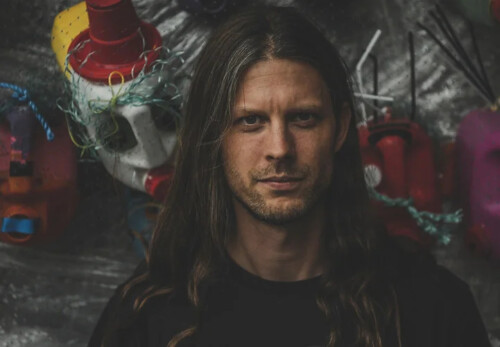
Michael Krumins photo by Vicky Athanassopoulou

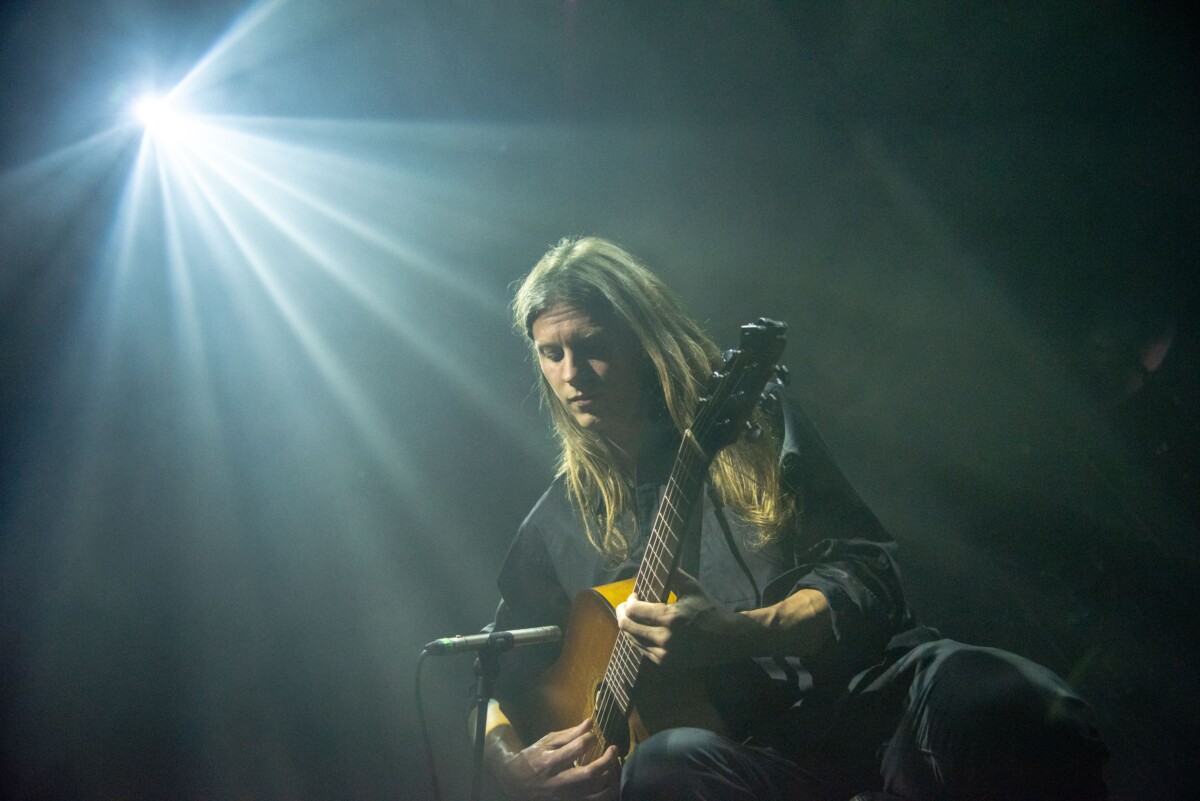
But if on the one hand we are here to talk about new releases directly from the Nordic lands then on the other hand the question that remains is “Who is Michael Krumins?” and here is another one of those fantastic discoveries from these ends of the planet, Michael is a multi-instrumentalist born in the small and “mechanical” Moss, having shared his childhood in Vennesla, but who decided to live music in its purest essence, reaching the world in all directions and dedicating himself completely to this sound universe without imposing borders. Michael over the years has transformed experience gained into diversity and the vast knowledge gained from a master’s degree in music, tours across Europe and America and a multitude of captivating and experimental projects from Europe to Africa that brought it all to a musician with a resume so complete that a brief introduction becomes a complex explanation and just a brief overview of what INFINITY contains. But before I continue talking about this vertiginous album I want to remind you, dear readers, don’t be fooled by the serene image of this peaceful musician, Krumins is a machine, a machine producing music. In addition to having a brilliant musical and experimental journey, he is also one of the ingenious hands alongside the gothic metal band Sirenia and the power of the strings of the progressive rockers Green Carnation, so believe me, this album brings much more than music, but also life and experiences, flavors and smells, memories and culture, and a multitude of influences that at one time or another reach the listener, INFINITY is a generous piece of Krumins epitome and his legacy and arrives on the 2023 release menu in a promising way.

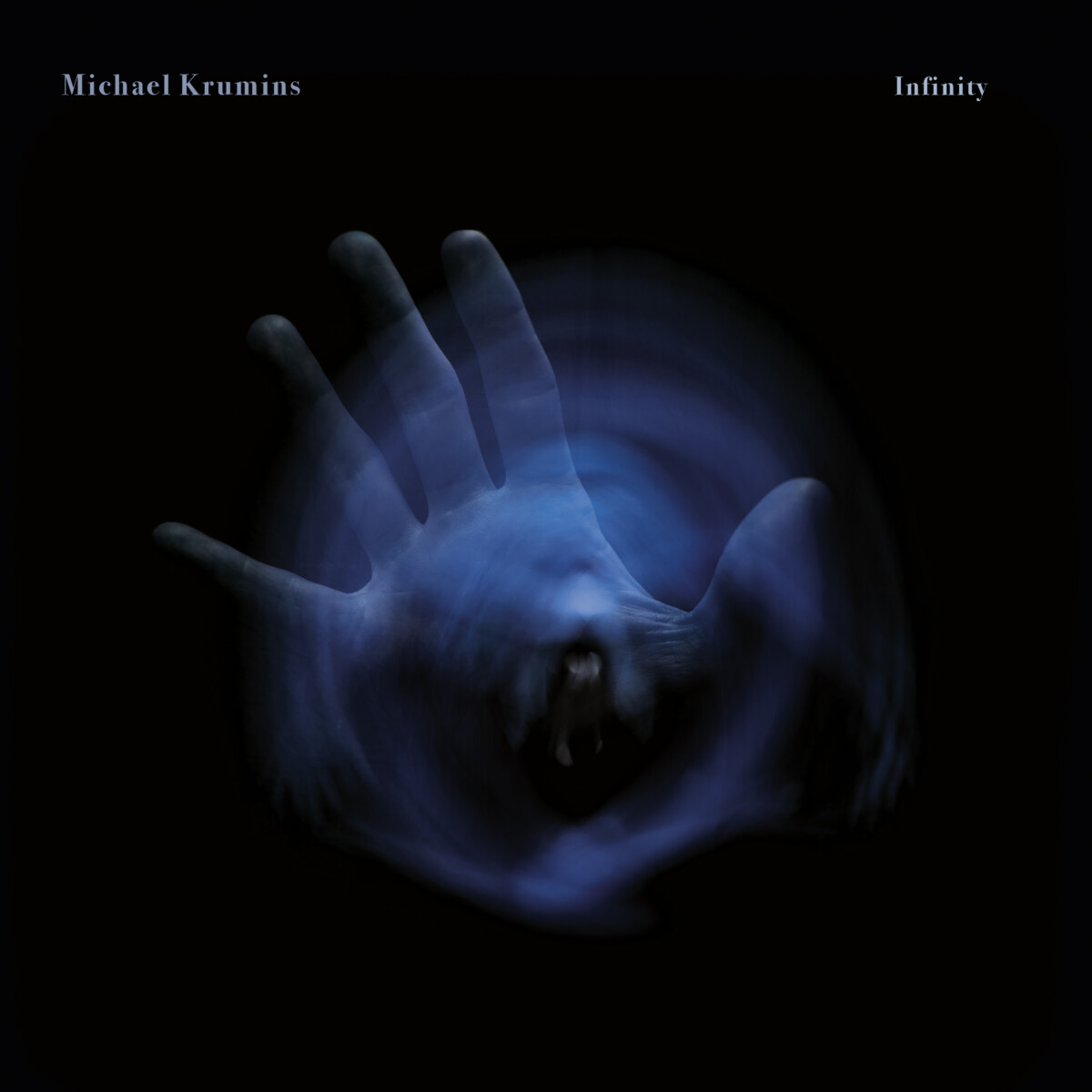
Now let’s move on to the album as if we were sitting at the table with a good wine being tasted for the first time, with a simple cover art created in partnership with the photographer Kostas Giokas and seven captivating tracks Krumins delivers to the public a delicious sound web with little more 43 minutes long, published and released on all digital platforms as well as on CD and vinyl, the vinyl with a worthy metal direct mastering. Composed in its entirety by Krumins and practically played in its entirety by even though, only the percussion was played by Californian Larry Salzman, INFINITY was recorded at MD studio in Athens, mixed in Dolby atmos by Christer Cederberg and mastered by Morgan Nicolaysen.

Light the candles, put on your best glass, dear readers, we start our tasting in the pulsating “Diamorphosis” with a mixed flavor of flamenco and Spanish culture fused with unique tones in a cheerful and lively trail that changes the atmosphere as well as the seasons of the year, and if we talk about atmosphere, then the atmospheric “Red Soul” takes its place next and leads the listener to slightly blackened lines and folkloric mixtures united with the progressive that is Krumins’ hallmark. At this point it is important to point out, Krumins made himself an adventurer through the world and through music, strongly connected by the Nutopia collective and overflowing with references from Arab, Balkan and Turkish genres, this musician are not afraid to be daring, traveling to the four corners of the earth and bringing the full baggage of cultures such as Tanzania and Mozambique, Krumins teases as he strums the lovely “Adio” where I can almost smell the sauces simmering in Tuscany, or the freshness of the gentle drizzle of my beloved Como, Italy.

INFINITY arrives at “Loneliness” with the delicacy that reminds me a lot of the lines of the dear musician Gustavo Santaolalla, icy strums and depressive melodies nailed to the crying guitar that send the listener to an infinity of sensations and for a second my mind is cut by curiosity about Krumins (giant musical growth, well, are we talking about a Norwegian, but in love with the world? Well, what a pleasant surprise!) and then for the comfort that tracks like “Transition” offer, almost as if snuggling the listener in a tight hug, simplicity that falls on “Stardust” too and puts the listener in a state of reflection so harmonious that I hope the album doesn’t come to an end, but, like everything that is good, this end is inevitable and we close our tasting at the last and tastiest gulp, the title track “Infinity” and the corpulence of its more than nine minutes is a spatial throw of shimmering atmospheres and ethereal sound. INFINITY proves itself in every detail, in every second, an extraordinarily rich and solid album, played in its entirety like a meticulously polished jewel and waiting to be discovered each time it is played.

Krumins should be really proud, we have a true masterpiece here!


RATE: 10/10

RELEASE – March 24, 2023

TRACK LISTING

1 – Diamorphosis

2 – Red soul

3 – Adio

4 – Loneliness

5 – Transition

6 – Stardust

7 – Infinity


All music composed by Michael Krumins

RELATED LINKS

FACEBOOK

INSTAGRAM

YOUTUBE

OFFICIAL WEBSITE


Presave INFINITY on streaming services HERE


Begin typing your search term above and press enter to search. Press ESC to cancel.

Back To Top