Musikkanmeldelse (Review): Maunah – Hjarta (2026)

Some musical encounters begin with a discovery. Others begin long before the first note is played.

My journey to HJARTA does not begin today.

 Søren Sol Koldsen-Zederkof has already crossed the pages of my reviews around the world, and on Nordavind through LOS. Maunah itself had already visited us with Heimaland, in 2025. On that occasion, I found a band that seemed to carry something far greater than those three tracks could contain. There was weight, melancholy, a strange feeling that the guitars were not describing a landscape, but carrying its temperature — and, above all, the impression that our first encounter was merely a door left ajar.

I ended that review by calling Maunah a diamond in the making.

Now they are back.

And perhaps the most dangerous part of encountering a band again is discovering that they took seriously what they had promised.

 HJARTA does not arrive to repeat Heimaland. Nor does it seem interested in proving that Maunah has grown simply because there is now a full-length album. What we find here is more interesting: a band that seems to have understood its own language more deeply and decided to speak louder, deeper, and with far less fear of letting silence take part in the conversation.

Six tracks.

Just over forty-one minutes.

And there is an almost indecent amount of space within them.

Space for doom to expand without haste. For folk to slip through the cracks. For modern metal to introduce strength without crushing the atmosphere. For monumental guitars that know when to pull back. For drums that do not merely keep time, but guide the music through different states of consciousness.

And then there is Søren.

But not the Søren we encountered in LOS.

Or perhaps it is precisely him — simply seen through another landscape.

His voice still carries that ritualistic, ancestral quality, but here it encounters a different creature. In HJARTA, it does not necessarily need to tell us something. It seems intent on making us feel before we can understand.

Words cease to be boundaries.

Timbre becomes language.

Maunah’s vocal language works through sound, emotion, and cadence, allowing the voice to inhabit the composition almost as an entity of its own, without ever detaching itself from the instrumental organism.

Perhaps that is why HJARTA feels less like an album you listen to and more like a place you enter.

And places require time.

The band itself evokes images of despair and open skies, leaves crushed beneath one’s feet, cold passing through the forest floor, sunlight warming the skin, and air filling the lungs. I will not take these images as an explanation for the album.

I would rather discover whether the music can accomplish all of this on its own.

Because now there is a question hanging over these six tracks:

What happened to that diamond?

The answer begins with “Heimaland.”

The walk begins.

My listening journey through HJARTA begins.

And something needs to be remembered very clearly: there are albums… and there are albums.

Some will simply be part of the entertainment. Others will be the experience.

HJARTA comes to offer exactly that: experience, sensations, emotions.

So there is nothing more appropriate than giving this piece the time it demands.

Detach yourself from your busy world for a few moments and allow the guitars and harmonies, together with Søren’s voice, to gently carry you away.

From its very first movements, “Heimaland” establishes far more than weight: it builds a vast and deeply atmospheric sonic territory, in which every instrumental layer expands the dimension of the composition.

The guitars do not simply emerge to crush; they build. There is density, repetition, and a kind of deliberate hypnosis in their motifs, while bass and drums provide depth and movement. The composition shows no anxiety to reach its destination. It allows its ideas to remain long enough to transform into sensation.

And perhaps that is precisely where its strength lies.

The track grows progressively, accumulating intensity until it reaches moments of genuine grandeur. But when it could simply insist upon brute force, it retreats.

Approximately halfway through, the density gives way to a more sparse, contemplative passage, almost suspended in the air.

It is not a simple interlude.

It is absence.

And absence transforms everything that came before it.

The return of the instrumentation takes on another meaning. The music does not simply begin again; it returns carrying the memory of what has just happened.

We are no longer hearing the same “Heimaland” we left behind.

There is a sense of transformation, as though the very place had changed while we were away.

Its structure seems to follow an almost organic movement:

density, expansion, climax, rarefaction, reconstruction, new climax, and dissolution.

It is an architecture that privileges experience over haste.

And there is something particularly fascinating about this relationship between the music and its title.

Heimaland — homeland, home ground — might suggest shelter, belonging, return.

But the music offers a far more ambiguous interpretation.

Here, home does not necessarily mean comfort.

There is belonging, but there is also distance.

There is beauty, but something unsettling beneath its surface.

Like looking at a familiar landscape after many years and realizing that it is still yours, even though it is no longer quite the same.

It would therefore be far too easy to simply classify it as atmospheric, melancholic, or epic.

“Heimaland” is a landscape song, but not a postcard.

It evokes an ancient, cold, ancestral place where beauty and solitude coexist without needing to explain themselves.

And when it reaches its conclusion, it does not need a monumental explosion to prove what it has built.

It can simply dissolve.

Leaving behind the feeling that we have been somewhere — and that, for a few minutes, that place also existed within us.

Perhaps this is the greatest quality of “Heimaland”:

it does not seem interested in telling the listener a story.

It wants to make them remember one.

A considerable part of HJARTA’s power lies in the way its instruments do not compete for space. They build the same idea through different functions.

The guitars are the axis.

In “Solin Vaugna,” repetitive riffs and lines establish the track’s identity, alternating between density and openness. There is weight, but also an evident concern for texture. The guitars are not merely a wall of sound; they guide the music through different emotional states.

It is an important distinction.

Weight, here, is not synonymous with excess. It is dimension.

 Jakob Kiilerich’s bass works close to the body of the composition. It fills the lower registers, anchors the guitars, and makes certain moments feel physically heavier. As the music becomes denser, its presence helps transform weight into something tangible, almost corporeal.

The drums are the pulse of the journey. They guide shifts in intensity without breaking the contemplative character of the compositions. When the track grows, they provide the strength necessary to transform atmosphere into grandeur; when they retreat, they preserve the tension the music needs to remain alive.

 “Saivør” brings this collective grandeur to the surface.

The guitar provides the structure.

The bass gives it depth.

The drums set the steps in motion.

And between them there is enough room for each layer to remain audible and carry consequence.

In “Vætna,” this relationship finds another form of expression. Each instrument seems to understand its place without trying to occupy another’s territory. It is one of the album’s most mature qualities: Maunah understands that a heavy composition does not need to be filled at all times in order to feel immense.

Sometimes, all it takes is removing something.

Letting the composition reveal its own dimensions.

Allowing the echo to expose the size of the sonic environment.

This is where HJARTA distances itself from a purely generic reading of Nordic Doom Metal.

The roots of doom remain evident in the slowness, density, the gravity of the guitars, and the way the band understands the importance of time. But the album does not remain confined by them.

Nordic folk emerges as memory.

Modern metal appears as strength.

Atmosphere brings the two together.

And then there are the small details — those elements that may not immediately sit at the center of the composition, but transform the setting into something distinctly its own.

The overtone flute, played by Søren, is one of them. Its timbre seems to emerge from another time, introducing an almost primitive, ritualistic dimension among guitars, bass, drums, and voice.

It is not there to add exoticism.

It seems to belong to the music.

As though that sound had not been placed upon the composition, but discovered within it.

These small deviations expand HJARTA’s palette. Sounds that might disappear beneath the mass of the guitars are given enough room to exist, creating shifts in temperature throughout the compositions.

And this includes the very way Søren works with his voice.

There are moments when it sounds like singing, others when it approaches an ancestral vocalization, and still others when it deliberately merges with the instrumentation.

The voice is not simply above the music.

It inhabits the same organism.

This attention to texture helps explain why the Nordic folk element does not sound like a layer applied over the doom. It is woven into the album’s identity.

It is as if Maunah took the heavy structure of doom, opened its walls, and allowed other things to enter.

The wood.

The earth.

The wind.

Memory.

And perhaps it is precisely this delicacy in the details that makes the weight of HJARTA feel even greater.

Because a forest is not defined only by its trees.

It is defined by what exists between them.

And Maunah seems to understand this deeply.

When we reach the title track, “Hjarta,” the journey has already crossed much of this territory.

And then we realize that the album has been speaking about presence all along.

Not necessarily about a linear narrative, nor about events that need to be deciphered. But about what remains in the body after an experience has ended.

The six tracks function as parts of the same organism.

They are forty-one minutes built with a very particular understanding of space and movement.

That is why HJARTA does not feel like something meant to be played in the background while something else is happening.

It demands presence.

The production understands this. Tue Madsen, responsible for recording and mixing the bass and drums at Antfarm Studios, works alongside the overall mixing and mastering by Jens Moss Thorsen of Mossy Production, preserving weight and definition without turning atmosphere into a mere decorative effect.

The guitars breathe without losing density.

The bass remains present.

The drums have body.

And the voice moves through the layers without destroying the mystery surrounding it.

Even the silence seems to have been mixed.

There is a small distance between recognizing potential in a band and witnessing that potential begin to take shape.

In 2025, Heimaland left me standing before a door left ajar.

In 2026, HJARTA walks through that door.

The lineup of this new chapter brings together Søren Sol Koldsen-Zederkof on lead vocals, backing vocals, and overtone flute; Mads Medom Papsø Laursen on lead guitar; Janus Holst Aaen on guitar and backing vocals; Jakob Kiilerich on bass; and Tim Sejr Larsen on drums, following the departure of Danny Woe, Maunah’s co-founder and member of the previous lineup, who left the band due to creative differences.

It is a change that belongs to the band’s history and to this particular moment in its journey.

Because HJARTA does not sound like a band trying to discover who it wants to be.

It sounds like a band beginning to discover what it already was.

And perhaps that is the difference between a promise and an identity.

What I found in Heimaland was still taking shape.

Here, what was once possibility has gained substance.

Gained depth.

Gained silence.

Gained space.

And, above all, gained courage.

 HJARTA does not try to drag us into darkness through force.

It builds an environment.

Lets the cold pass through the music.

Allows the light to appear for a few seconds before the shadows reclaim the path.

And when the final note disappears, there is that strange feeling that something has been left behind.

Or perhaps it has been left within us.

It is difficult to know.

Perhaps that is precisely the point.

Because some albums end when the music ends.

Others keep walking with us.

HJARTA belongs to the second category.

And now I can look once again at that diamond I mentioned in 2025.

It is no longer merely in the making.

It has begun to reflect the light.

RATE: 9,5/10

 TRACK LISTING

1 – Heimaland

2 – Solin Vaugna

3 – Theinajau

4 – Saivør

5 – Vætna

6 – Hjarta

LINE-UP

Søren Sol Koldsen-Zederkof – lead & backing vocals, overtone flute

Mads Medom Papsø Laursen – lead guitars

Janus Holst Aaen – guitars, backing vocals

Jakob Kiilerich – bass

Tim Sejr Wettendorff Larsen – drums


Bass & drum recording & mix by Tue Madsen at Antfarm Studios, Aarhus (DK)

Guitars & vocals self-recorded by the artists at home studios (DK)

Mix & mastering by Jens Moss Thorsen at Mossy Production, Aarhus (DK)

Artwork by Søren Sol Koldsen-Zederkof

Layout by Łukasz Jaszak

Prophecy Productions — September 18, 2026
Nordic Doom Metal | 41:18

RELATED LINKS
FACEBOOK

INSTAGRAM

YOUTUBE

SPOTIFY


Musikkanmeldelse (Review): Maunah – Heimaland – EP (2025)

 Back to the lighthouse and eyes on the radar for the new releases of 2025. We’re back, sailors, and today our talk is about

MAUNAH, the new Danish progressive doom metal act and their debut EP HEIMALAND, released independently on June 20, 2025.


Heimaland arrives from the Nordic borders as an engaging album of just over 20 minutes, featuring three solid tracks full of atmosphere, a strong doom/progressive influence in folk and alt-rock, sumptuous landscapes, and impeccable instrumentals, courtesy of Danny Woe on drums and growl, Kasper Szydlowski and Janus Aaen on guitars, and none other than Søren Sol Koldsen-Zederkof on vocals, the same from the LOS project, bringing a rootsy and shamanic touch. The band also now features Jakob Kiilerich on bass, solidifying their unique sonic essence, and obviously everything is a mix that can’t go wrong, after all they brings together experienced members from Helge, (ex-)Woebegone Obscured, Altar of Oblivion and even Funeral Chasm.


Rich in emotions and playing with sensations, Heimaland delivers tracks with varied layers that mix melancholy with slow tempos in aligned guitars from beginning to end, there are choruses dueling with heavier riffs while Søren presents a new, more mature vocal composure that enchants.
Saivør brings another highlight of this release, a track with strong blackened vocals that contrast perfectly with bass and drums, an abrupt change of tempo and rhythm that reminds me a lot of Opeth at times.
We closed the EP with Theinajau, and here progressive music lovers will certainly feel right at home. A melancholic, deep track with tight riffs and perfect atmospheres, and incredible guitar work, we can’t wait to see what the future holds for MAUNAH.
I personally would be thrilled with a final production that is a little more refined and cleaner in a full-length, but for now MAUNAH is a diamond in the making.

RATE: 9,5/10

TRACK LISTING 
1 – Heimaland
2 – Saivør
3 – Theinajau

LINE UP 
Søren Sol Koldsen-Zederkof – Vocals

Danny Woe – Drums and growl
Kasper Szydlowski – Guitar
Janus Aaen – Guitar
Jakob Kiilerich – Bass (joined after photoshoot and recording)

RELATED LINKS 

Facebook

Instagram

YouTube

Spotify

Musikkanmeldelse: Michael Krumins – Infinity (2023)

“Alt for Norge!”…as Jorn’s version song would say among so many other exaltations to dear Norway…here we are back to my beloved icy home and its multi-faceted wonders ready to be discovered to talk about our best men, today specifically about the Norwegian multi-instrumentalist MICHAEL KRUMINS and his debut solo album INFINITY, which was be released via MSK Records on March 24, 2023.

Michael Krumins photo by Vicky Athanassopoulou

But if on the one hand we are here to talk about new releases directly from the Nordic lands then on the other hand the question that remains is “Who is Michael Krumins?” and here is another one of those fantastic discoveries from these ends of the planet, Michael is a multi-instrumentalist born in the small and “mechanical” Moss, having shared his childhood in Vennesla, but who decided to live music in its purest essence, reaching the world in all directions and dedicating himself completely to this sound universe without imposing borders. Michael over the years has transformed experience gained into diversity and the vast knowledge gained from a master’s degree in music, tours across Europe and America and a multitude of captivating and experimental projects from Europe to Africa that brought it all to a musician with a resume so complete that a brief introduction becomes a complex explanation and just a brief overview of what INFINITY contains. But before I continue talking about this vertiginous album I want to remind you, dear readers, don’t be fooled by the serene image of this peaceful musician, Krumins is a machine, a machine producing music. In addition to having a brilliant musical and experimental journey, he is also one of the ingenious hands alongside the gothic metal band Sirenia and the power of the strings of the progressive rockers Green Carnation, so believe me, this album brings much more than music, but also life and experiences, flavors and smells, memories and culture, and a multitude of influences that at one time or another reach the listener, INFINITY is a generous piece of Krumins epitome and his legacy and arrives on the 2023 release menu in a promising way.

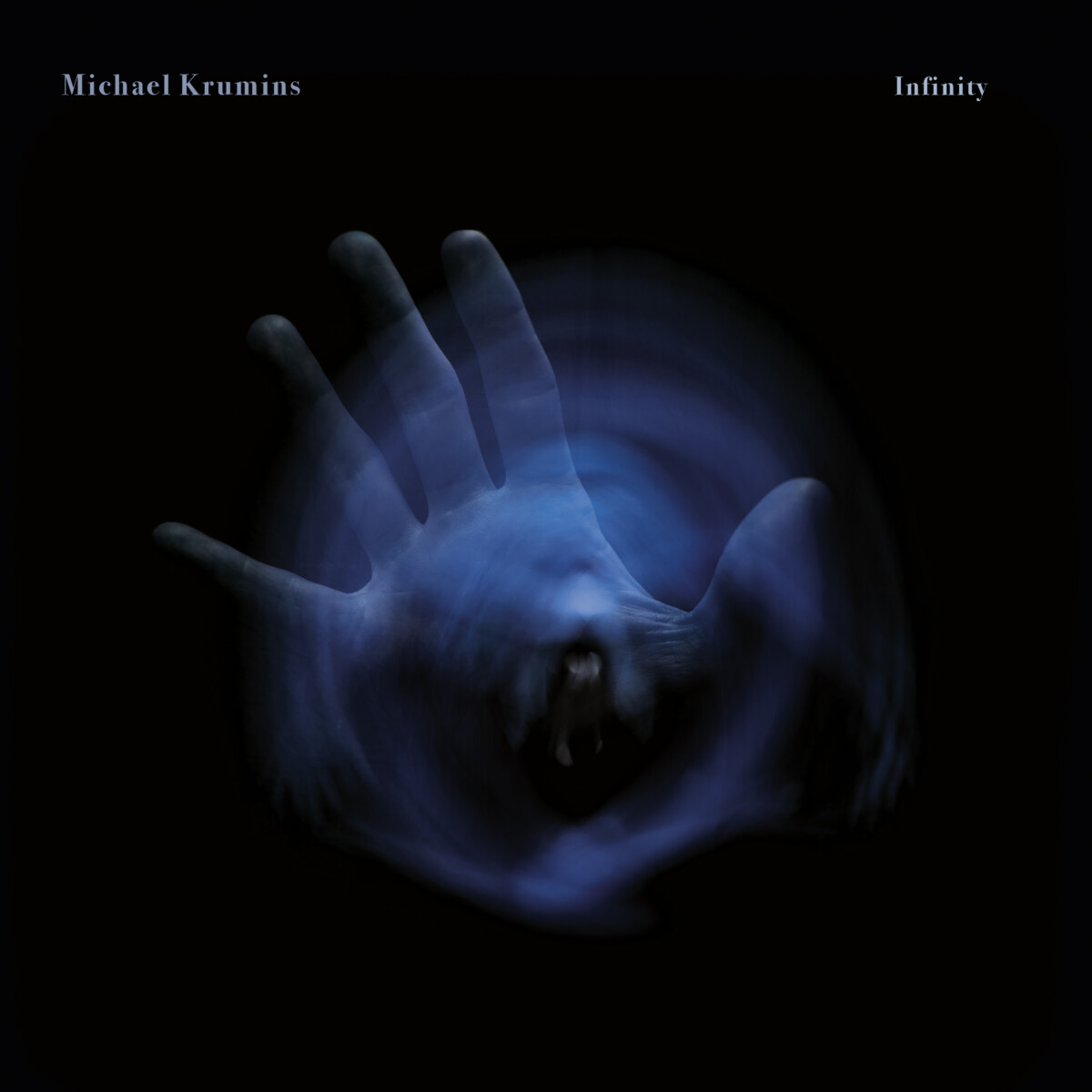
Now let’s move on to the album as if we were sitting at the table with a good wine being tasted for the first time, with a simple cover art created in partnership with the photographer Kostas Giokas and seven captivating tracks Krumins delivers to the public a delicious sound web with little more 43 minutes long, published and released on all digital platforms as well as on CD and vinyl, the vinyl with a worthy metal direct mastering. Composed in its entirety by Krumins and practically played in its entirety by even though, only the percussion was played by Californian Larry Salzman, INFINITY was recorded at MD studio in Athens, mixed in Dolby atmos by Christer Cederberg and mastered by Morgan Nicolaysen.

Light the candles, put on your best glass, dear readers, we start our tasting in the pulsating “Diamorphosis” with a mixed flavor of flamenco and Spanish culture fused with unique tones in a cheerful and lively trail that changes the atmosphere as well as the seasons of the year, and if we talk about atmosphere, then the atmospheric “Red Soul” takes its place next and leads the listener to slightly blackened lines and folkloric mixtures united with the progressive that is Krumins’ hallmark. At this point it is important to point out, Krumins made himself an adventurer through the world and through music, strongly connected by the Nutopia collective and overflowing with references from Arab, Balkan and Turkish genres, this musician are not afraid to be daring, traveling to the four corners of the earth and bringing the full baggage of cultures such as Tanzania and Mozambique, Krumins teases as he strums the lovely “Adio” where I can almost smell the sauces simmering in Tuscany, or the freshness of the gentle drizzle of my beloved Como, Italy.

INFINITY arrives at “Loneliness” with the delicacy that reminds me a lot of the lines of the dear musician Gustavo Santaolalla, icy strums and depressive melodies nailed to the crying guitar that send the listener to an infinity of sensations and for a second my mind is cut by curiosity about Krumins (giant musical growth, well, are we talking about a Norwegian, but in love with the world? Well, what a pleasant surprise!) and then for the comfort that tracks like “Transition” offer, almost as if snuggling the listener in a tight hug, simplicity that falls on “Stardust” too and puts the listener in a state of reflection so harmonious that I hope the album doesn’t come to an end, but, like everything that is good, this end is inevitable and we close our tasting at the last and tastiest gulp, the title track “Infinity” and the corpulence of its more than nine minutes is a spatial throw of shimmering atmospheres and ethereal sound. INFINITY proves itself in every detail, in every second, an extraordinarily rich and solid album, played in its entirety like a meticulously polished jewel and waiting to be discovered each time it is played.

Krumins should be really proud, we have a true masterpiece here!


RATE: 10/10

RELEASE – March 24, 2023

TRACK LISTING

1 – Diamorphosis

2 – Red soul

3 – Adio

4 – Loneliness

5 – Transition

6 – Stardust

7 – Infinity


All music composed by Michael Krumins

RELATED LINKS

FACEBOOK

INSTAGRAM

YOUTUBE

OFFICIAL WEBSITE


Presave INFINITY on streaming services HERE


Musikkanmeldelse (Review): LOS – Galdrablót (2023)

Damn, time really flies! Who would have thought that the years would go by so fast? Or…are we all really too distracted these days? Not sure, after all, almost four years have passed since the release of “Solblót“, the debut album by the Danish project LOS, and here we are again talking about them…or him, rather, what I mean is, LOS is what we might call a “one man band” or “the do-it all“, with a little extra sporadic help. Maybe I’m wrong but I think that the last few years have thrown us into a loop of tragedies and events so intense that they have taken away our sense of time and space, but, putting everything aside now and looking forward, we can once again turn our ears to the creations of the genius multi-instrumentalist Søren Sol Koldsen-Zederkof and the brand new album “Galdrablót“, the new pupil under the name of LOS which will be officially released on the 10th of February. “Galdrablót” is an album being released independently on all streaming platforms and on vinyl with a limited edition of 300 copies, with eight tracks and just over thirty-four minutes in length.

For those who don’t know, Søren is one of those diamonds encrusted in the Scandinavian fjords, another one of those sound treasures that should have been part of a more stronger musical veins for a long time now and beyond the oceans, yet another versatile and multi-faceted musician who delivers to the public much more than quality songs but a complete work of art and sound, an experience inspired by wild elements as much as nature and the very human essence.

“Galdrablót” offers a kind of broader continuation to the debut album “Solblót, yet expanding the experimental panorama on voices and sounds from within to ritualism and shamanism to calmer and more meditative landscapes endowed with overtones and drone elements that travel through an improvised language inspired by Old Norse and Icelandic but without a direct meaning, thus opening an endless window for interpretation. LOS wants to reach everyone, or rather, sheltering everyone and their senses.

As many can imagine I am absolutely suspect when talking about LOS, this project headed the very few perfect albums in my conception that year (2019) and besides everything it nailed the hundredth place in my reviews still in times of Roadie Metal, besides everything it brings all the experience of Søren and his magical years of Krauka and his ancient and solid Viking Folk, so to sit down once more to listen to a new creation by LOS awakens in me a feeling of home and once again the certainty of something amazing ahead, it’s almost like taking a new book in your hands for the very first time and already being absolutely sure it will be wonderful, that’s what this project offers, not just an album but an immersive and complete sound experience. So ladies and gentlemen, sit down and relax, the “menu” is served!

From now on, hold your breath and throw yourself into “Galdrablót” from “Månesejd”, something that sounds like “he who waits” or “phases of the moon” to me, which leads us to practically the same path if we consider that patience is needed for both, and it is this lull necessary for patience that we savor at this point. “Månesejd” is a delicate intro track, packed with the splash of bells and Søren’s shamanic chants accompanied by “drums” and sighs. And if, on the one hand, the delicacy of that moment intoxicates the listener, then “Solfærd” and its solar journey takes us back to the horizon and a new dawn. A sense of ancestry invades the enclosure and the trail opens up space for an invasion of feelings and sensations, almost like a walk on a cold winter morning in the middle of the woods that I love so much in my dear Norway. I can only love LOS, the artistic work of this album has such a great power over the listener that it becomes inevitable to connect the music to feelings and memories, even about the past, obviously the listener needs to allow himself to experience it, but then the “door” unlocked and the experience started, it becomes increasingly difficult not to fully immerse yourself.

Søren has a very peculiar and unique way of composing, an example of this is “Ravnefjeld”, a track that even features the delicate vocals of Nanna Solveig Barslev in the background, one of the most recognized names in the Danish Folk, Viking and medieval scene. “Ravnefjeld” has a vibration and intensity very different from the previous ones, at times with vocal timbres very similar to Asian folk music, and since we are heading towards the mountains then “Jotunheim” completes the enchantment, and I like that, this “play” with languages and times, the doubt if we are talking here about the Jotunheim fjords or about the land of the giants of Norse mythology, remains at your discretion to identify, but like both definitions “Jotunheim” has an intense sound and the vocals advanced to a more imposing and serious tone marked by percussion. As I said from the beginning of this review “Galdrablót” is a more reflective album than its predecessor and the title track concretizes this idea, the little more than five minutes of the track embraces us with a tender and deep song of instrumental and scintillating atmospheres that momentarily move us away from the idea of ritual to the concept of ceremony, contact with everything above us, ancestry and mysticism. I believe this is one of the most beautiful moments of this release.

 “Ofring” in turn is the second single released from “Galdrablót”, it won an official video more than a year ago and brings darker lines to this album. “Ofring”, sacrifice in the literal translation from Danish and Norwegian, means exactly that, an exemplification of “returning something back to nature and gods”, an offering in an obscure ritual wrapped in shamanic chants, and for the first time on this album I hear instruments differentiated and we gain a more blackened tone of LOS, the fruits never fall far, do they? Another fact that arouses my curiosity is the introduction of guitar and bass in a more expressive way in this track, which makes us understand that this project is like a box of surprises from which you can expect anything to come out, and believe me, from one way or another it will make sense.

Completing the album is “Krigskald” and its intonation to the people for battle, choruses superimposed on Søren’s voice, giving the track a touching magnitude and depth at the same time as a mixture of melancholy and simplicity. We close the album with “Disa” and all the ritualistic instrumentation that embraces us as a “see you later” from an album that is equivalent in importance both as a piece of history, is a faithful record of culture and traditions, as well as a kind of of sound therapy.

As I expected, Søren impressed me once again and LOS continues to be a unique gem worth discovering.

If you, like me, seek in an album more than the same, if you, like me, seek to find new sensations in music, then surrender to LOS and welcome to new horizons.

RATE: 10/10

RELEASE – February 10, 2023

TRACK LISTING
1 – Månesejd
2 – Solfærd
3 – Ravnefjeld
4 – Jotunheim
5 – Galdrablót
6 – Ofring
7 – Krigskald
8 – Disa

All music composed by Søren Sol Koldsen-Zederkof
All instruments and vocals by Søren Sol Koldsen-
Zederkof
Guest vocals on Ravnefjeld by Nanna Solveig Barslev
Recorded and mixed by Søren Sol Koldsen-Zederkof
Mastered by Quentin Høegh Nicollet – Black Sun Audio
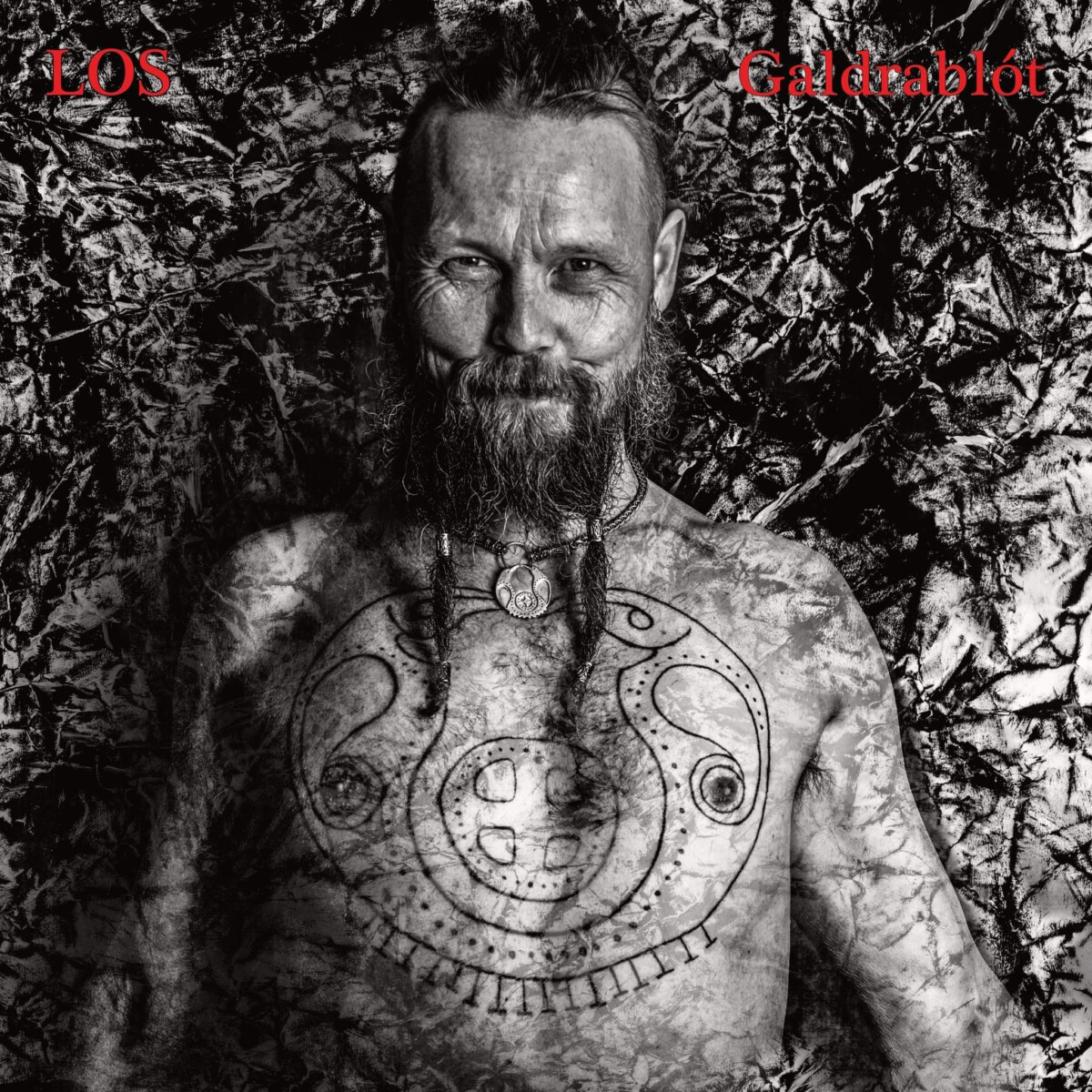
Album cover art, painting and photography by Søren Sol
Koldsen-Zederkof

Layout and manufacturing By Støjfabrikken

RELATED LINKS
FACEBOOK

YOUTUBE

Presave Galdrablót on streaming services HERE

Begin typing your search term above and press enter to search. Press ESC to cancel.

Back To Top